Drawing Practice
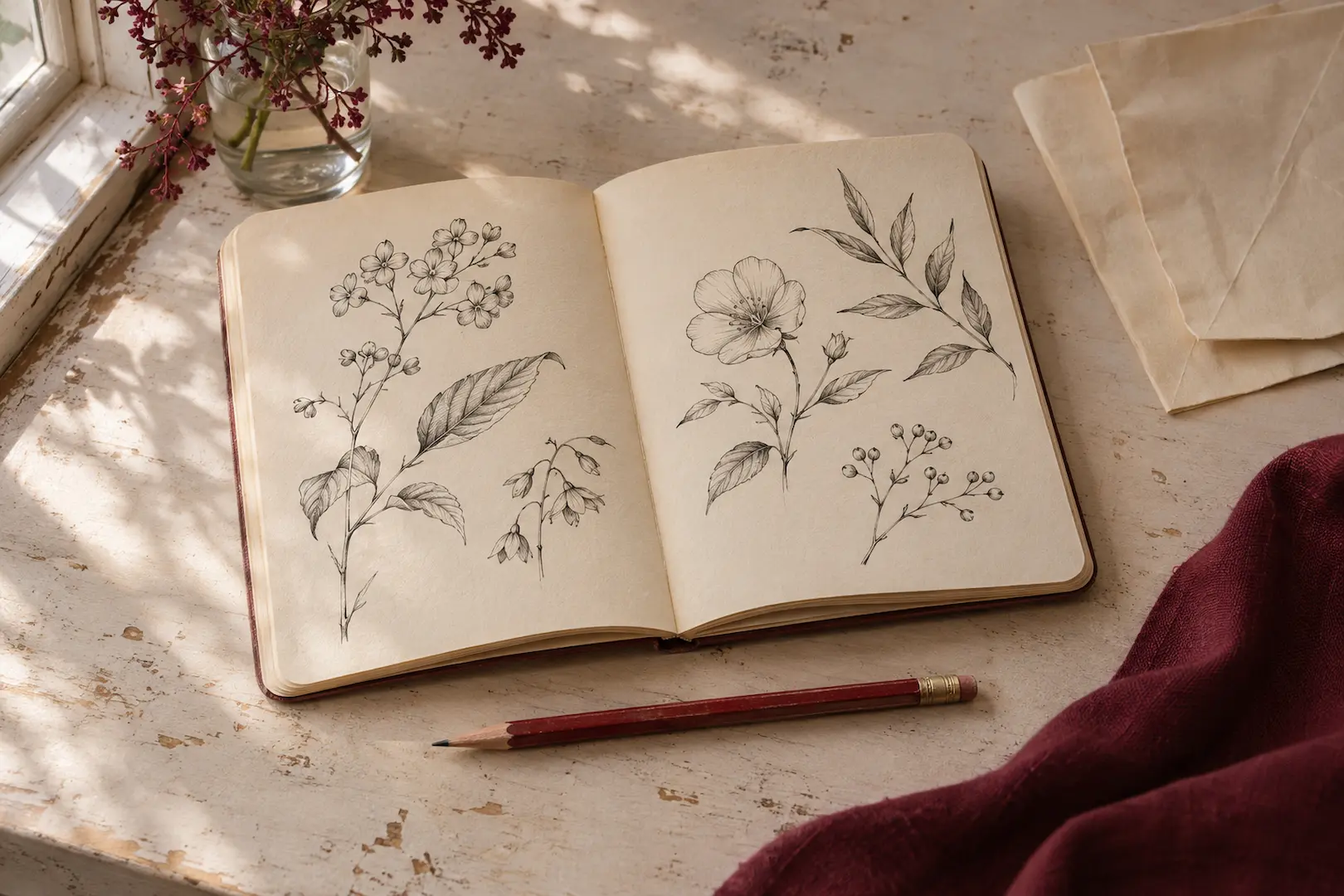
A Drawing Reference Notebook That Helps You Make Something New
Collect useful visual observations, record where they came from, and turn the notebook into a place for decisions rather than an endless image pile.
↗Drawing.
Objects.
Personal histories.
Drawing, personal collections, and a home with room for art.
Drawing practice / objects / rooms
Drawing Practice
Collect useful visual observations, record where they came from, and turn the notebook into a place for decisions rather than an endless image pile.
↗Drawing Practice
Use a limited set of motifs and a clear visual rhythm to create a drawing sheet for display, without treating it as a tattooing instruction.
↗Drawing Practice
Choose a manageable sequence of images and words before committing to a finished format.
↗Drawing Practice
Test several arrangements quickly so the first pleasing idea does not become the only one.
↗Drawing Practice
Choose a repeatable question and an endpoint so the project can develop without expanding forever.
↗Drawing Practice
Use a short review to distinguish a useful adjustment from another round of restless marks.
↗Test the frame sizes, viewing height, and spacing with temporary paper shapes before deciding where the real work belongs.
↗Drawing Practice
Use the empty shapes around a chair, jug or plant as a fresh way into a drawing.
↗Keeping & Moving
Build an inventory, decide who packs each piece, and ask about fragile work before the moving crew reaches the door.
↗Drawing Practice
Use two attempts to discover which details your mind keeps and which observation changes.
↗Explain the subject, intended use, and practical limits while leaving room for the artist to make the work.
↗Personal Archives
Make a useful visual record of each piece, its condition, and its place in the room before frames and folders begin to move.
↗